Hyundai Engineering & Construction Actively Collaborates with Startups. By participating in various public–private open innovation programs and running its own startup competitions, the company discovers startups with outstanding technological capabilities and works closely with them. Through these collaborations, innovative ideas are materialized and applied to real construction sites. Representative examples include partnerships with JH Global, which holds photocatalyst-based heat-reducing rubber chip paving technology; APLAYZ, which provides AI-based music curation services; and Planning Nature, which offers natural asset value analysis solutions.
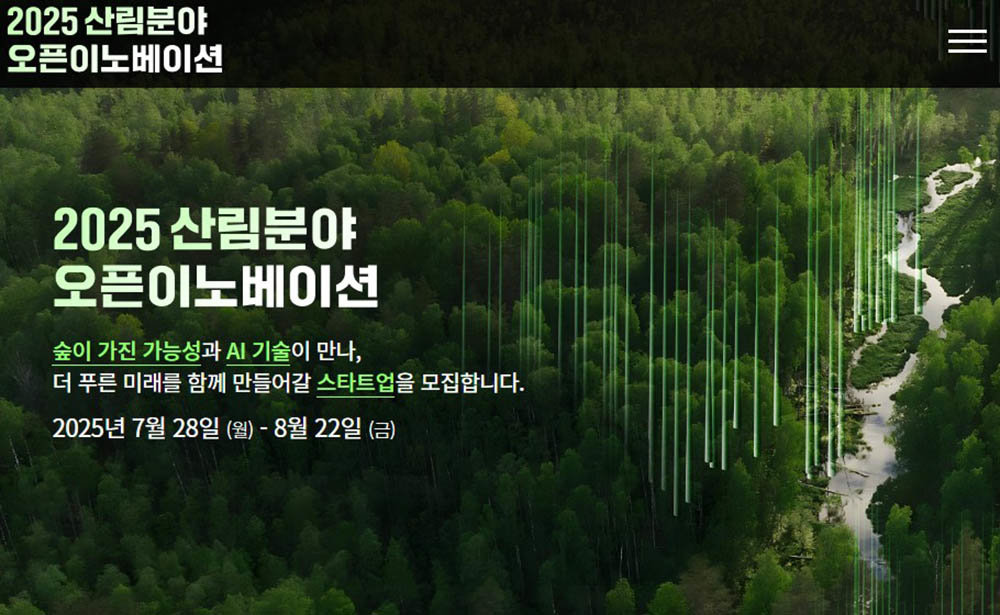
Hyundai Engineering & Construction is currently participating in the “2025 Forestry Open Innovation” program, supervised by the Korea Forest Service, hosted by the Korea Forestry Promotion Institute, and operated by the Seoul Center for Creative Economy & Innovation. The Forestry Open Innovation program is designed to create new business opportunities by supporting practical collaboration and commercialization between large corporations and startups. Through this initiative, Hyundai Engineering & Construction is working to advance the landscape tree management process for apartment complexes. To this end, it is collaborating with startup Raydot, which possesses technology for measuring and collecting tree growth environment data, and startup SaveTree, which specializes in building tree databases (DB) and inventories.
IT Donga met with Seung-Hwan Lee, Senior Manager (Responsible Manager) at the Exterior Team of Hyundai Engineering & Construction’s Housing Business Division, to discuss the company’s open innovation activities with startups and the 2025 Forestry Open Innovation program.

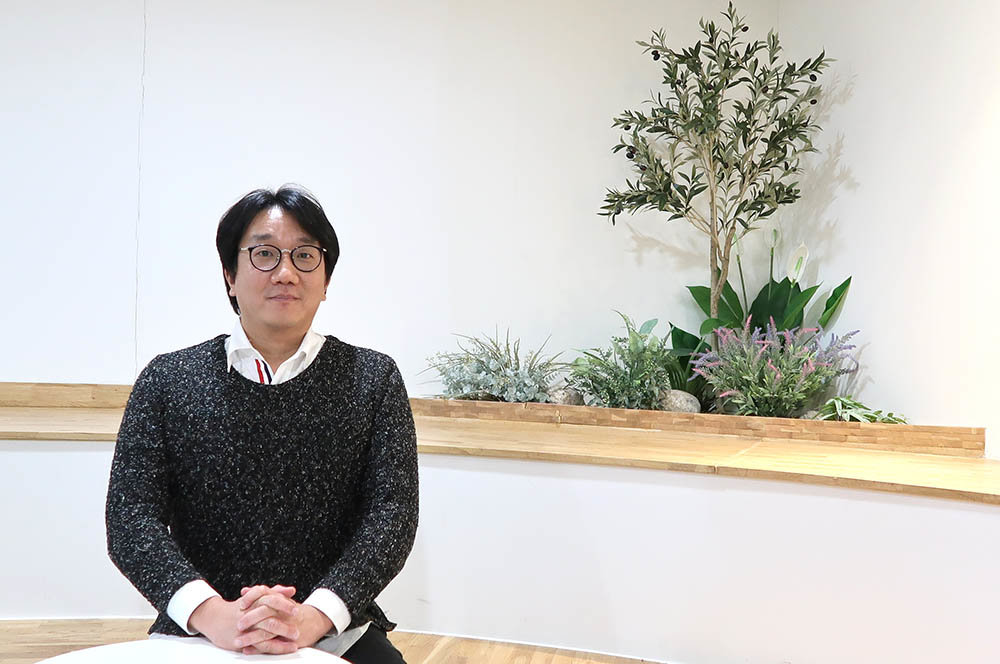
Seung-Hwan Lee, Senior Manager, Exterior Team, Housing Business Division, Hyundai Engineering & Construction / Source: IT Donga
IT Donga: Hello, Mr. Lee. Could you please introduce yourself and your team?
Seung-Hwan Lee: Hello, I’m Seung-Hwan Lee from the Exterior Team of Hyundai Engineering & Construction’s Housing Business Division. Our team oversees exterior design, including apartment building exteriors, landscaping, lighting, and shared spaces. Through this work, we visually express the brand identities of Hyundai Engineering & Construction’s residential brands, THE H and Hillstate. Our goal is to deliver emotional value to customers by differentiating external residential spaces through high-quality design. I am currently responsible for landscaping within the Exterior Team.
IT Donga: Hyundai Engineering & Construction is very active in open innovation collaborations with startups. What kind of activities are you involved in?
Seung-Hwan Lee: Each business division has its own needs for new technologies or products. However, even when innovative ideas are conceived, it’s often difficult to realize them. In such cases, the Corporate Strategy Team proposes various programs that allow collaboration with startups that possess the necessary technological capabilities. We actively utilize these programs to work with startups.
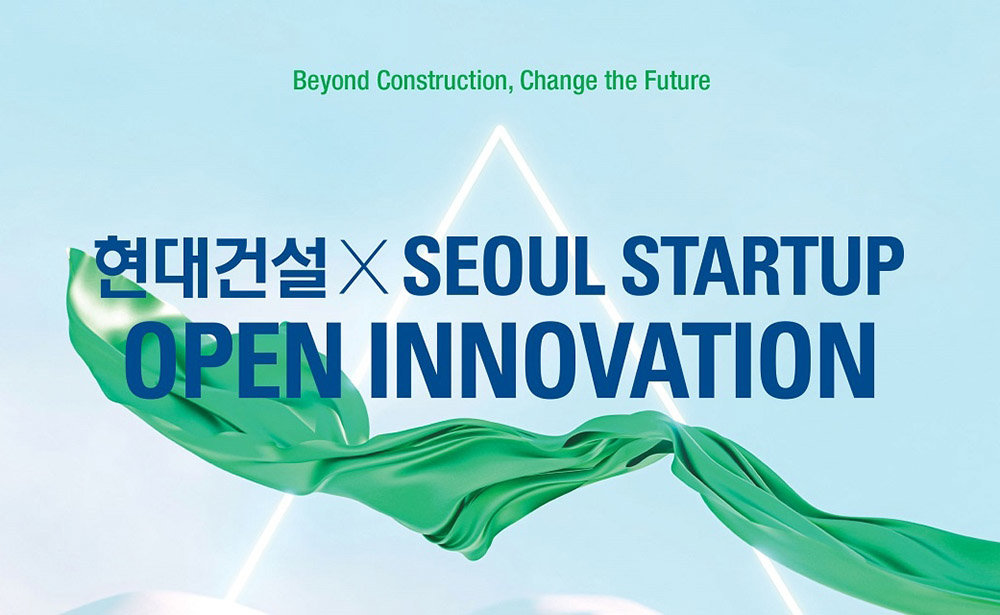
We also host our own competitions. Since 2022, Hyundai Engineering & Construction has held the “Hyundai Engineering & Construction X Seoul Startup Open Innovation” competition every year in partnership with the Seoul Business Agency. This program discovers startups with growth potential in the construction sector and supports collaboration, along with follow-up connections to programs such as the Startup Leap Package and Super-Gap Support initiatives. Through this, we gain opportunities to collaborate with a wide range of startups.

Hyundai Engineering & Construction holds the ‘Hyundai Engineering & Construction X Seoul Startup Open Innovation’ competition annually / Source: Hyundai Engineering & Construction
IT Donga: How has your experience been collaborating with startups?
Seung-Hwan Lee: I believe collaboration between startups and large corporations is a great opportunity to create synergy. Startups have innovative ideas and technologies but face limitations in capital, technology validation, and credibility. Through collaboration with large companies, they can conduct on-site technology verification and secure credible references, enabling growth. On our side, working with startups allows us to take on new challenges and try diverse, creative approaches. This helps both parties grow and coexist.
For these reasons, the company actively encourages collaboration with startups. In particular, our team has achieved various results over the past three years through such collaborations, so we are especially proactive. We now even plan separate themes specifically for startup collaboration.
IT Donga: Could you share some of the成果 (results) achieved through collaboration with startups?
Seung-Hwan Lee: Among our achievements, I’d like to highlight collaborations with JH Global, APLAYZ, and Planning Nature.
JH Global is a startup that holds photocatalyst-based heat-reducing rubber chip paving technology. This is an eco-friendly technology that reduces harmful environmental factors while also mitigating temperature increases. We applied this material to playground floors in apartment complexes under construction and tested it for about a year. We also supported follow-up connections, including testing at nationally accredited testing institutions. Currently, photocatalyst-based heat-reducing rubber chip paving is being applied to Hillstate apartment complexes.
APLAYZ is a startup providing AI-based music curation services. We play music in shared and outdoor landscaped spaces, and through collaboration with APLAYZ, we provide music optimized for specific spaces. Services include AI-composed apartment-exclusive tracks, healing sounds tailored for outdoor rest areas, and sound masking services that emphasize specific frequencies to reduce external noise such as traffic.
Planning Nature provides natural asset value analysis solutions. We are currently collaborating with Planning Nature to improve residential environments through landscaping and to enhance efficiency in spatial design.
In addition, Hyundai Engineering & Construction has collaborated with various startups such as Sixty Hertz, which develops optimal charge–discharge control module software; Mobinn, which develops autonomous delivery robots; and A-Labs, which develops modular carbon dioxide resource utilization systems—achieving diverse results through these partnerships.

2025 Forestry Open Innovation / Source: Seoul Center for Creative Economy & Innovation
IT Donga: You are currently participating in the 2025 Forestry Open Innovation program run by the Korea Forest Service, the Korea Forestry Promotion Institute, and the Seoul Center for Creative Economy & Innovation. What led you to join this program?
Seung-Hwan Lee: Apartment residents face many difficulties in managing trees. Effective tree management requires understanding growth environments and taking proactive measures to reduce defects. However, apartment complexes can have thousands of trees to manage, with wide variations in specifications. There is also a lack of technology for analyzing, measuring, and collecting data on tree growth environments. As a result, once responsibility shifts to residents after completion, maintaining trees becomes challenging.
We therefore considered database construction through measurement and collection of tree-related data and the advancement of tree management processes. We submitted this idea to the Hyundai Engineering & Construction Seoul Startup Competition last year, but couldn’t find a suitable partner at the time. Then the Corporate Strategy Team introduced us to the 2025 Forestry Open Innovation program.
Looking into the program, we found that our proposed topic aligned well with the business scope of the Korea Forest Service and the Korea Forestry Promotion Institute, and we believed forestry-specialized startups would show interest. That’s why we decided to participate.
IT Donga: Could you describe the current progress of the open innovation project?
Seung-Hwan Lee: Under the theme of advancing apartment landscape tree management processes, we are collaborating with Raydot on precise measurement and analysis of tree growth environment data, and with SaveTree on developing an integrated tree management solution for apartment complexes.
Raydot is an agri-tech startup with expertise in sensor technologies and devices that measure and manage temperature, moisture, and crop nutrition in indoor farms. We are working with Raydot to develop IoT devices capable of measuring and transmitting tree growth environment data—such as temperature, moisture, and soil dryness—in outdoor spaces. Once development is complete, we expect to secure growth environment data, build databases, improve management efficiency, and establish automated management systems.
SaveTree is a startup that collects street tree data using LiDAR equipment and builds inventories by converting it into databases. This enables quality risk assessment and improved maintenance efficiency. SaveTree already has strong capabilities in the tree management areas we need, so we are jointly developing an integrated tree management solution suitable for apartment complexes. Once completed, it should enable precise tree data inventories, tree quality monitoring, and prediction of maintenance risks.
We identified the problem and proposed the task, but initially didn’t know how to solve it. Meeting startups with the right technologies allowed us to concretize solutions and actually implement them. This is the synergy between large companies and startups—and the true appeal of open innovation.
IT Donga: What is the future schedule for the 2025 Forestry Open Innovation program?
Seung-Hwan Lee: The program is scheduled to run until July 2026. Since it’s difficult to closely assess tree conditions during winter, we will focus on ideas, planning, design, and development until March, and begin on-site demonstrations from April onward. After a first-phase wrap-up and performance evaluation by July, we will decide whether to proceed with follow-up programs.

IT Donga: What are your expectations from this innovation initiative?
Seung-Hwan Lee: Our primary goal is to advance apartment landscape tree management processes. By building precise tree data inventories through growth environment data, we aim to improve maintenance efficiency and establish a foundation for process automation. Of course, we also hope that the startups collaborating with us will gain significant growth opportunities.
Beyond that, we hope these solutions can be expanded not only to our apartment complexes but also to those of other construction companies, as well as parks managed by local governments or national institutions—improving tree management efficiency, addressing environmental issues, and enhancing citizens’ quality of life. We also hope this initiative encourages greater interest from government bodies such as the Korea Forest Service and leads to expanded follow-up support programs.
IT Donga: Lastly, could you share your future plans regarding open innovation?
Seung-Hwan Lee: Given the many成果 achieved through open innovation, not only our team but Hyundai Engineering & Construction as a whole remains open to collaboration with startups. We will continue working with startups to realize innovative ideas through various initiatives. By continuously discovering and collaborating with innovative startups in new products and technologies, we aim to build a virtuous cycle where large corporations and startups grow together. We also hope that our successful collaboration cases become widely known, fostering a culture of mutual growth through collaboration between more large companies and startups.
IT Donga Reporter: Man-Hyeok Han (mh@itdonga.com)